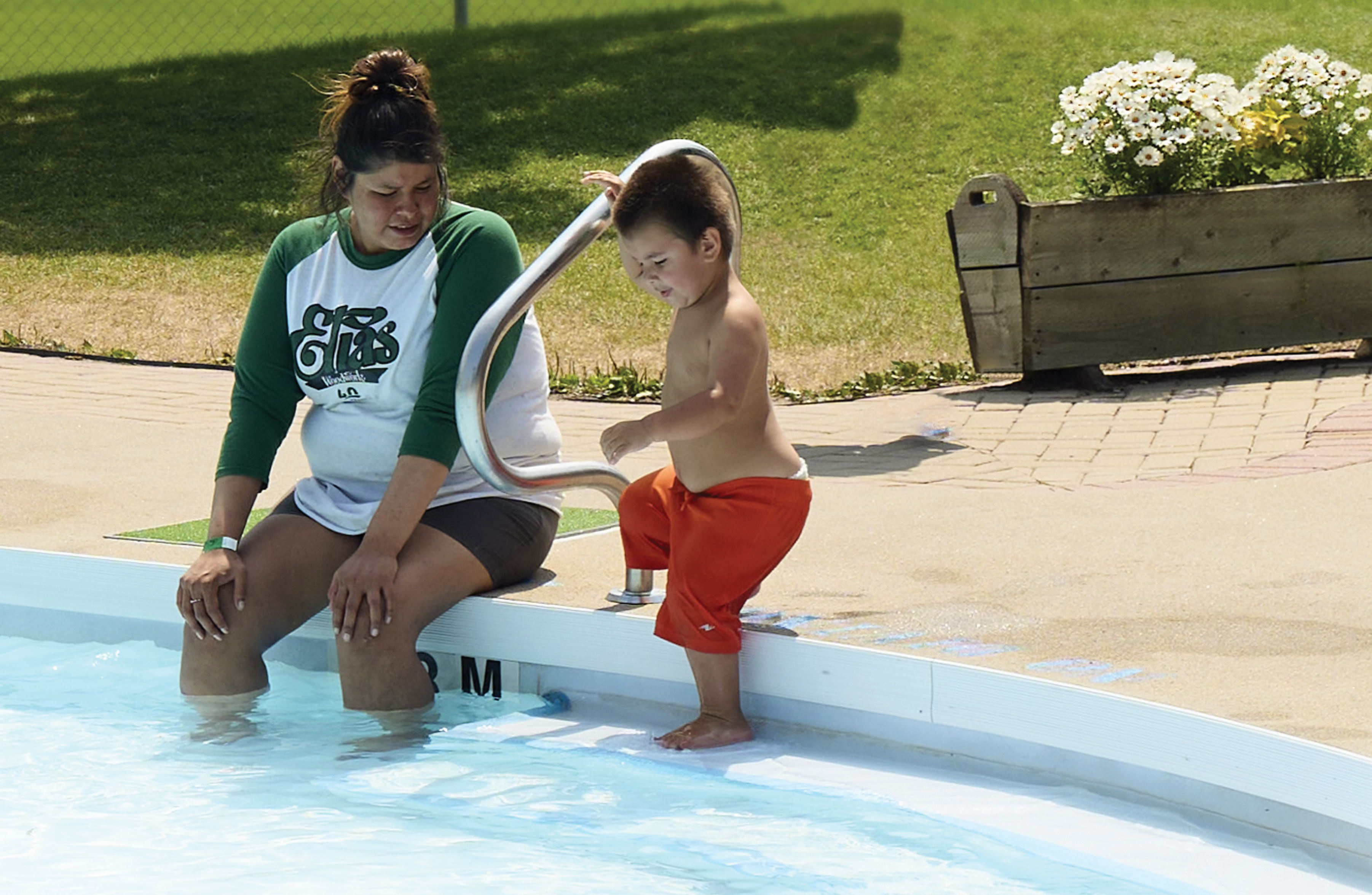
I have spent more than 15 years lifeguarding which means long days at wading pools, indoor pools, outdoor pools, and lakes. I blew whistles, answered questions, trained staff, and reminded parents (so many parents!) of one thing:
❝ Please stay within arm’s reach of your child. ❞
It used to feel like part of the job script, important, of course, but routine.
Now, as a mom to an 18 month old boy who moves through life like a tiny tornado, those words hit differently. They are not just professional guidelines anymore. Now those words are personal.
The Shift from Lifeguard Brain to Mom Brain
Even before I had my son, I knew the numbers. In Canada, drowning is the No. 1 cause of unintentional injury related death among kids ages 1–4, and the second leading cause of preventable death for kids under 10. In the most recent Manitoba Drowning Report, 100% of drowning cases involving children under 5 happened when supervision was absent or distracted.
I knew all of that. I saw close calls. I trained for emergencies. But nothing prepares you for the moment you hold your own child and realize how little stands between curiosity and danger.
My son is at that magical, and let’s be honest – exhausting age where he is fearless about everything. If there’s water, he wants in. To him, water is fun and exciting. To me, it is a reminder that supervision is not a background task. It is an active, hands on responsibility.
One afternoon at a wading pool, a little one, under two wandered while their parent turned for a second to tuck something back into a bag. I saw him toddle towards the water’s edge and then tip forward, face down. I ran, reached, and pulled him out. The water was only knee deep on him, but he did not have the strength to push himself up. That moment plays in my head whenever someone says, “It’s shallow. What’s the worry?” Shallow does not always mean safe. Sometimes it just means silent.
Why Arm’s Reach Really Matters
If your child is under 5, be close enough to touch them. Not watching from a picnic table. Not half looking while checking messages. Right beside them.
- Toddlers move fast, faster than you think.
- Drowning is almost always silent.
- Flotation devices are not safety gear.
- Even shallow water can be dangerous.
Here is the part that surprises people: Most drowning incidents with young children happen in familiar places, often pools where adults feel “comfortable” because they have been there before. Many of these cases occur in pools and bathtubs. I have had so many chats with friends who do not come from a water safety background. They will say, “We’re at our cabin right beside the lake—they’re wearing a lifejacket; they’re in swim lessons; they’ll be fine.” I love them, so I am honest: if we get this wrong, the risk is death. Not to scare anyone, just to be clear about the stakes.
I tell them my perspective comes from years on a pool deck and something even heavier: reading coroner’s reports. Once you have seen the stories behind the numbers, you do not unsee them. Being within arm’s reach stops feeling overprotective. It just feels like love in action.
Real Life Tips I Share with Friends
Make a “Water Parent.”
One adult. One job. Full focus on the kids.
Use touch supervision.
Keep a hand on your child near water. They feel safer and they are safer.
Get down to their level.
Crouch or sit so you can see what they see and react quickly.
Stay calm and confident.
Water should not be scary, just respected.
Start lessons early, but remember…
Swimming lessons help, but they never replace supervision.
Before I became a mom, “stay within arm’s reach” was my safety rule.
Now, it is my promise.