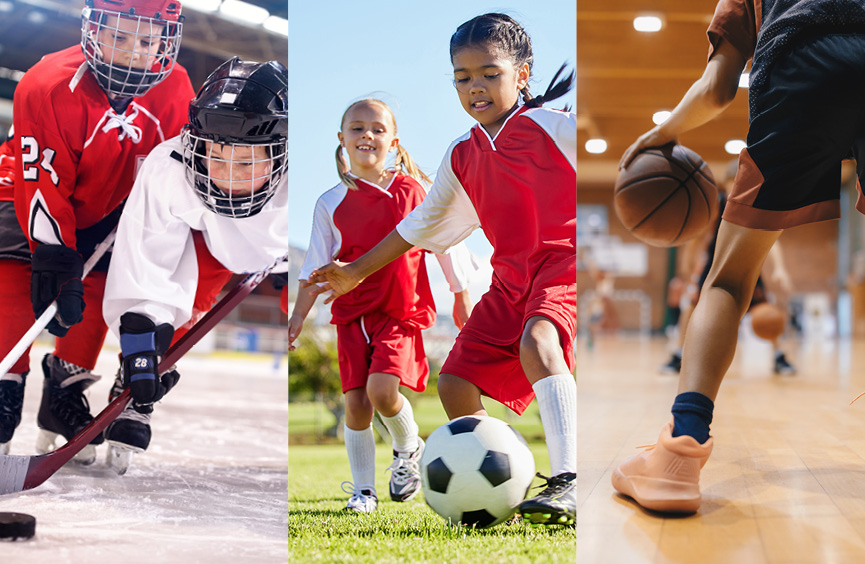
There has been an ongoing debate in sport for years: should young athletes specialize in one sport yearround to stay ahead of the competition, or play multiple sports and specialize later?
There are many factors to consider. Here we have provided the short version to that question. To read Jeff’s full article visit here
Growth and Development
Every child grows and develops at different rates, which can have a significant impact on the level at which they play. This can in turn affect their mental outlook towards that sport. That’s where resilience and staying positive comes into play.
The key is to control the things you can control.
You can’t control when your body grows, but you can control how you eat, train, think and react to what happens to you.
I can speak to this from the perspective of my own son. Between the ages of 8 and 10, he was a solid hockey player with good skills and hockey sense for his age. At 11, he was the last cut from a AA team, which left him devastated. It was difficult to explain to him it had very little to do with his skills, but more related to his size and strength (or lack of). He was small and coaches picked more physically developed players.
For the next few years, he was consistently among the last cuts at the top level. Rather than giving up, he focused on becoming a better athlete. Then between the ages of 14 and 15, he hit a major growth spurt! Soon after, he earned a spot in AAA hockey, passing many players who had developed earlier because he stayed patient and focused on long-term athletic development.
As a Strength and Conditioning Coach, it solidified my approach on how taking a long-term development with young athletes is the right thing to do.
The Downfalls of Early Specialization
1. Injuries
The research is clear, early specialization can increase the risk of injury from repeatedly performing the same movements.
2. Burnout
Burnout can be caused by many things including:
- Heavy training that can lead to mental and physical exhaustion.
- Intense practice with no time for unstructured play can lead to less enjoyment of a sport.
- Highly structured, intense training can leave youth athletes feeling like they have no control or input into their involvement in sport.
These things can affect multi-sport athletes too. As parents, we don’t need to plan out every minute of every day for our kids. They need time to unwind, just like adults do.
The benefits participating in multiple sports:
1. Filling the Movement Toolbox
Playing multiple sports allows your child to fill their movement toolbox with multiple patterns, helping reduce the risk of overuse injuries while building physical literacy and overall athleticism.
2. Injury Prevention
Playing multiple sports exposes children to a wider range of movement patterns, helping reduce injury risk by limiting the repetitive stress associated with a single sport.
3. Having Fun
The majority (99+%) of kids never make it to the Olympics and Paralympics, or professional level. That’s why it’s important to focus on the many benefits sport provides beyond elite performance.
- Sport = building confidence and character.
- Sport = working in a team and building relationships with others.
- Sport = developing good work habits.
- Most important, sport is about having fun competing with and against your friends.
These are also great life skills that carry over to life outside of sport.